"Be The Lighthouse Not The Storm"

Lately, a loud trend has taken over the commercial printing and graphic design industry. Many shops are putting up signs and yelling "NO AI ACCEPTED." They get the technical frustration. Raw AI-generated graphics are often a printing nightmare—they come with low resolution (garbage DPI), zero vector lines, and messy typography.
But at Scooter Studios, we refuse to turn away local small businesses, entrepreneurs, and creators who are just trying to bring their visions to life. You spent time dreaming up your concept, and you love your creation. You shouldn't be penalized for using new tools to get your business started.
AI Generated Images

AI Images are all the rage today. Let's face it, AI is not going away no matter how much we dislike it. It’s a great vehicle to express and create your vision but, it has not figured out how to translate the image to a true printable resized format.
I use Ai to inspire, show examples, then recreate these items for print quality.
AI is good for quick advertisement, web graphics used to share ideas and inspire but not for large OR smaller printing purposes
Why they look good on screen
<<
This same image to the left looks pretty good, if printed at this exact size will most likley look good. If you increase the size or decrease the size the resolution does not readjust.
This image was create with 4k and upscaled to HD 3328 x 4992
It looks good at 24" High x 16" Wide
The above picture is the resolution if you wanted to make this a wall mural and make it life size or 96"High x 64" Wide
Why AI does not translate to print

The Optical Illusion of the Screen: Screens cheat your eyes using high pixel density and glowing light.
Pixel Density (PPI): A standard 4K computer screen squeezes about 8 million pixels into a small 27-inch frame.
Tiny Grid: Because those 8 million pixels are packed tightly together, your eyes cannot see the individual squares.
Emissive Light: Screens project light directly into your eyes, which naturally blurs the microscopic gaps between pixels and makes transitions look smooth.
The Harsh Reality of Large-Format Print: Printers cannot create detail out of thin air; they can only spread out what is already there.
The Math Problem: If your AI image is 1024 x 1024 pixels, it looks perfectly sharp on a phone. If you print that same image onto a 4-foot (48-inch) piece of vinyl, you only have about 21 pixels per inch.
Inch-Wide Blocks: Instead of a smooth curve, a single pixel is stretched until it is a visible, blocky square on the vinyl.
Reflective Light: Print relies on light bouncing off ink. Without the glowing blur of a screen, jagged edges and compression artifacts become completely exposed.
Upscaling and Formats
We will have to adapt to AI
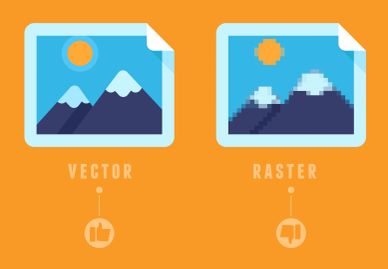
Creating AI images in High Resolution helps a little.
Upscaling also helps a little, but it will not create printable quality if you are planning to have a clean large OR smaller image than what was generated.
The only true re-sizable option is Vector. By this I mean it must be created as a vector. AI images that have already been created cannot simply be saved as a vector, it’s not the same.
AI Files vs Digital Camera
We will have to adapt to AI
We will have to adapt to AI

Unlike AI-generated images, which usually start out small and require upscaling, digital camera photos translate to printing through a process of sensor-to-ink mapping.
Because a camera sensor captures millions of independent physical data points (megapixels), it provides a deep reservoir of visual information that can be packed tightly together or spread apart depending on how large you print
We will have to adapt to AI
We will have to adapt to AI
We will have to adapt to AI
Only speaking for myself, I feel we will have to adapt. AI is not going away. When I went to graphic design school in 1983, we thought digital cameras were all the rage. Fast forward 43 years and we have AI. AI will teach itself 20 to 1 over the next couple years.
Just know until then, fixing AI images is not FREE, take TIME and WILL have to be done if you want print quality images.
- DONT FORGET A FAMILIAR STORY -
The story of Kodak is an American rise-and-fall saga defined by revolutionary innovation and a catastrophic failure to adapt.